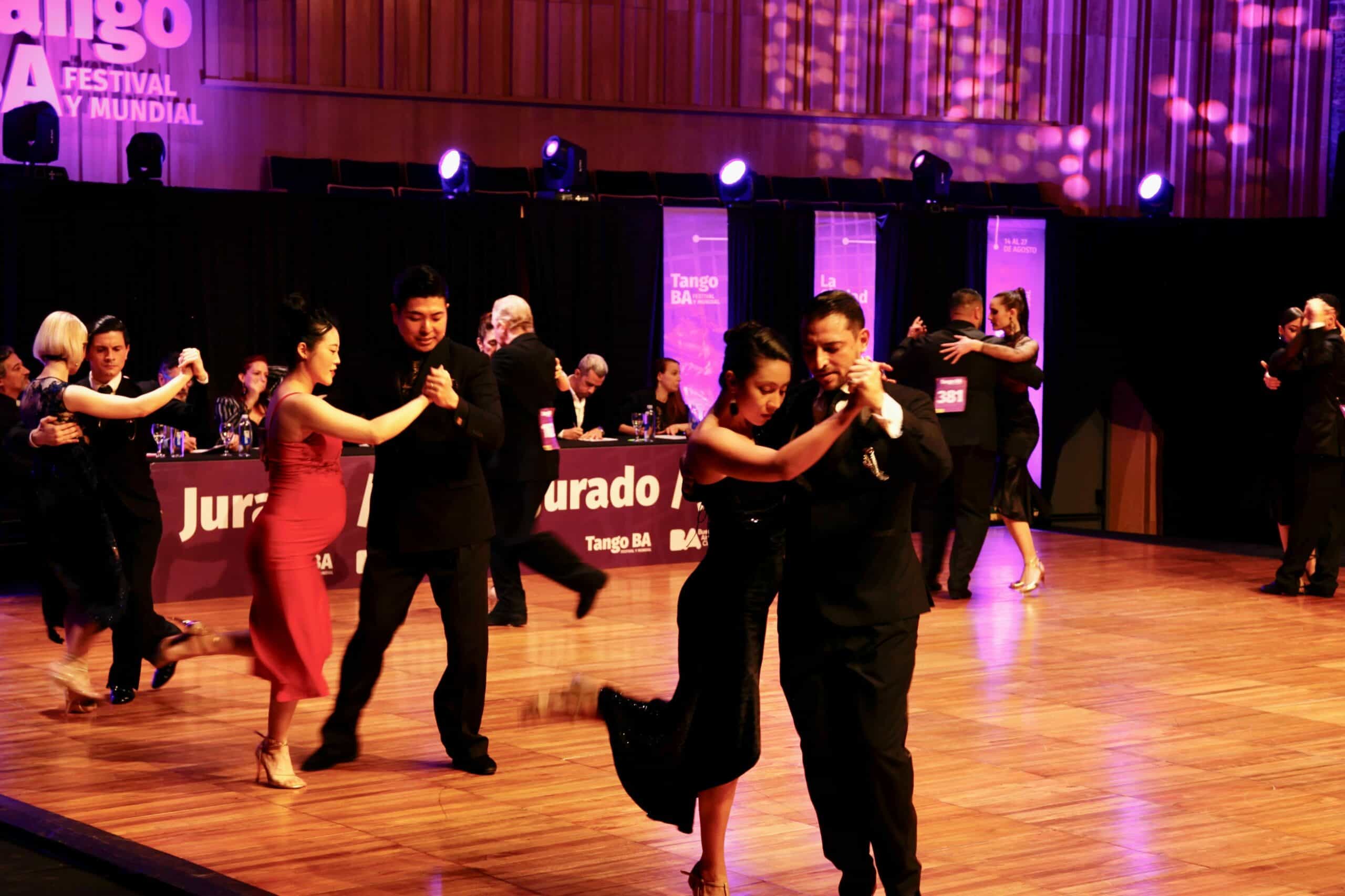
Argentina is the natural pilgrimage site for tango lovers. You can study Argentine tango anywhere in the world, but there is still something incomparable about experiencing it in the country where it was born, surrounded by the music, codes, language, and social atmosphere that shaped it. For dancers, musicians, and curious travelers alike, tango festivals in Argentina offer a chance to see the dance not just as performance, but as a living culture.
What makes these festivals special is their variety. Some are huge public events with competitions, concerts, and official programming; others are more focused gatherings for social dancers, with workshops by famous maestros and long nights of milongas. A few are designed almost like cultural pilgrimages, combining classes, live music, city tours, and immersion in Buenos Aires nightlife.
If you want to attend a tango festival in Argentina at least once, the best strategy is not to ask which one is objectively “best,” but which one matches your style. Some festivals are perfect for spectators, some for social dancers, and some for people who want serious training. The following events stand out because of their reputation, scale, atmosphere, or symbolic importance in the tango world.
Tango BA Festival y Mundial
No list can begin anywhere else. The Tango BA Festival y Mundial is the most iconic tango event in Argentina because it brings together festival programming and the World Tango Championship in Buenos Aires. The city’s tourism portal identifies it as a major official event, and international tango competition circuits explicitly refer to Buenos Aires as the destination where national champions go on to compete at the Mundial.
This matters because Tango BA is not just another dance gathering. It sits at the center of the tango calendar as both a public cultural festival and the symbolic peak of competitive tango. Even people who never compete often dream of attending at least once, because the event represents tango at its most visible, institutional, and international.
For visitors, the appeal is broad. Spectators can enjoy performances, concerts, and the atmosphere of a city fully engaged with tango, while dancers can take classes, attend milongas, and watch top couples from around the world. The event is particularly valuable for first-time visitors because it combines accessibility with prestige: even if you are not deeply embedded in the tango scene, you can still feel that you are witnessing something important.
Another reason to prioritize Tango BA is scale. Unlike boutique festivals that mainly serve experienced dancers, the Buenos Aires festival has the reach to attract tourists, media, local audiences, and serious tango practitioners at the same time. That layered audience gives it a special energy, somewhere between a cultural celebration and an international championship.
CITA in Buenos Aires
If Tango BA is the public face of tango, CITA is often described as one of the premier insider events. Current 2026 references list CITA in Buenos Aires for March 16 to 21, 2026, and promotional descriptions call it “the most renowned tango festival in the world” and “the premier tango festival on the worldwide circuit.”
CITA’s reputation comes from its international orientation and its focus on social dancers who travel specifically for tango. Rather than being built around a citywide public festival format, it is known as a concentrated tango immersion: several days of dancing, workshops, and connection with people who plan their travel calendars around events like this.
That makes CITA especially attractive for dancers who already have some tango experience. If you know the codes of the milonga, enjoy long nights of social dancing, and want access to top-level teachers and an international crowd, CITA is one of the most compelling experiences in Argentina. For many social dancers, it is not just a festival but a benchmark event they compare all others against.
CITA also appeals to travelers who want tango to structure the whole trip. Instead of adding one show or one class to a broader Buenos Aires itinerary, you build the itinerary around the festival itself. The city then becomes part of the experience: daytime cafés, late-night milongas, workshops, and the feeling of sharing the week with dancers from many countries.
La Plata Baila Tango
Not every memorable tango festival in Argentina happens in central Buenos Aires. One event referenced in current 2026 tango listings is La Plata Baila Tango, included as part of a Buenos Aires–based tango travel package scheduled from late March into early April 2026.
La Plata, the capital of Buenos Aires Province, gives this festival a different identity. It is close enough to the capital to be accessible, but distinct enough to feel like a change of scene. For travelers, that can be a major advantage: you get tango immersion with a slightly less overwhelming urban pace, and often a stronger sense of participating in a regional event rather than a mega-festival.
What makes La Plata Baila Tango appealing is exactly that balance. It offers the possibility of experiencing Argentine tango culture beyond the obvious international hotspots while still staying connected to the Buenos Aires ecosystem. For tango travelers who want depth and a broader geographic sense of the scene, this kind of festival can feel more rewarding than simply staying within the capital’s best-known venues.
It is also a useful reminder that tango in Argentina is not confined to a few tourist-famous addresses. Festivals like this show how widely the culture is distributed and how strongly local communities still organize around social dance, live music, and seasonal gatherings.
Easter tango gatherings in Buenos Aires
Another category worth attending at least once is the holiday-based tango immersion trip. Current 2026 references list an Easter Tango in Buenos Aires experience running from March 25 to April 5, 2026, organized as a tango tour centered on milongas, lessons, and local experiences in the city.
This kind of event is slightly different from a conventional festival, but for many travelers it functions in a very similar way. You attend during a defined period, share the city with a temporary tango community, and move through a program of classes, nightlife, and cultural activities. The difference is that the experience is often more curated and more travel-oriented.
That curation can be a major advantage for newcomers. A classic tango festival can feel intimidating if you do not know the codes, venues, or level structure. A holiday tango program tends to simplify those logistics, making it easier to participate even if you are not deeply experienced.
For that reason, Easter tango weeks deserve a place on this list. They may not carry the institutional prestige of Tango BA or the elite circuit reputation of CITA, but they can deliver something equally valuable: a smoother, more welcoming path into the Argentine tango world.
Why these festivals matter
The best tango festivals in Argentina are not important only because of their schedules or star teachers. They matter because they show different faces of tango. Tango BA expresses tango as public culture and international competition. CITA expresses tango as a transnational social-dance community. Regional and seasonal gatherings express tango as travel, immersion, and shared ritual.
That variety is part of what makes Argentina so compelling for tango lovers. In some destinations, tango is presented mainly as performance for tourists. In Argentina, and especially in festival settings, you see the broader ecosystem: dancers, teachers, orchestras, DJs, local organizers, neighborhood traditions, and international visitors all feeding into the same culture.
Another reason these festivals matter is timing. The current 2026 calendar references show tango events spread across the year, with major gatherings in March, spring travel periods, and later annual cycles. That means travelers can choose a festival based on season, crowd level, and personal travel style rather than being forced into a single narrow window.
How to choose the right one
The right festival depends on what you want from the trip. If your dream is to witness tango at its most official and internationally recognized level, choose Tango BA Festival y Mundial. If you want a respected social-dance event with a strong international reputation, CITA is the more natural fit. If you want something broader and less obvious, consider regional or curated travel-focused events like La Plata Baila Tango or Easter tango weeks in Buenos Aires.
Skill level also matters. Beginners may find a highly social, experienced-dancer festival overwhelming if they arrive without context. In contrast, travelers new to tango often do better in guided programs or in festival periods where spectating and sightseeing are just as valid as dancing.
Budget and stamina matter too. A major tango festival often means multiple late nights, workshops during the day, and entrance fees across several events. A curated tango week may cost more upfront but reduce planning stress, while a public festival can offer more flexibility if you want to mix tango with museums, cafés, and general tourism.
What to expect in practice
Anyone attending a tango festival in Argentina should expect long days and even longer nights. Tango culture in Buenos Aires especially runs late, and many of the most memorable milongas do not peak until well after midnight. Festival weeks add workshops, performances, travel time, and socializing, so pacing yourself becomes part of the skill set.
You should also expect tango etiquette to matter. Even at international festivals, local customs around invitations, floorcraft, and social behavior still shape the experience. That is part of the beauty of attending in Argentina: you are not just consuming a cultural product, you are entering a living social world with its own codes.
Finally, expect emotion. Tango festivals in Argentina are not memorable only because they are well organized or prestigious. They stay with people because they compress music, movement, travel, and human connection into a few intense days that feel far bigger than ordinary tourism.
Which one to attend first
If you can attend only one tango festival in Argentina, the safest first choice is Tango BA Festival y Mundial because of its cultural weight, visibility, and broad appeal. It gives you the clearest sense of tango’s importance inside Argentina and lets you experience the city at a moment when tango becomes impossible to ignore.
If you are already a tango dancer and want an event built more directly around social dancing and festival immersion, CITA may be the more rewarding first pilgrimage. It offers a deeper entry into the international tango community while still placing you in Buenos Aires, the dance’s spiritual home.
For travelers who want something slightly less formal or more curated, holiday tango gatherings and regional events are excellent alternatives. They prove that the best tango experience in Argentina is not always the biggest one, but the one whose rhythm matches your own.