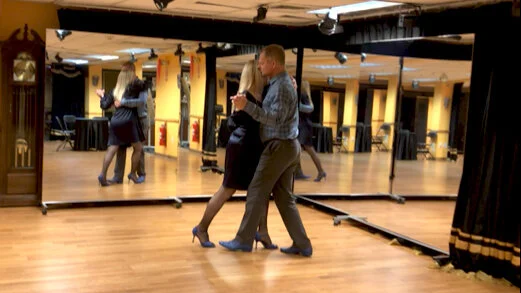
Buenos Aires is the world capital of tango, so it is no surprise that many visitors want more than a stage show. Watching professionals dance is exciting, but taking a private tango lesson lets travelers step into the culture themselves, learn the basics from local instructors, and leave Argentina with a story that feels personal rather than purely observational. In 2026, private tango lessons remain one of the most accessible cultural activities in the city, with options for complete beginners, couples, dance enthusiasts, and advanced tangueros looking for technical improvement.
For tourists, private lessons can be a smart choice because they remove much of the pressure that comes with learning tango in a public group setting. Instead of trying to keep up with a room full of dancers, you get direct guidance tailored to your level, your pace, and your goals. Some travelers simply want a fun one-hour introduction, while others use private lessons as a serious training block combined with milongas, practice sessions, and group classes.
Why choose private lessons
Tango looks elegant and spontaneous from the outside, but beginners quickly discover that it is a subtle dance built around posture, balance, walking, embrace, musicality, and partner connection. Private lessons are useful because an instructor can correct small details immediately, which is much harder in a group class. That individualized attention is one of the main reasons many schools and teachers in Buenos Aires promote private instruction as the fastest way to improve.
Private lessons also work well for tourists with limited time. If you are in Buenos Aires for only a few days, a private class can give you a clear, structured introduction without requiring a long-term commitment. Booking platforms and teacher websites consistently frame these sessions as suitable for individuals, couples, and small groups, often with flexible studios in neighborhoods like Palermo or downtown.
For couples, another advantage is comfort. A private setting makes it easier to laugh, make mistakes, and repeat basics without feeling watched. For solo travelers, it is often the easiest way to understand tango etiquette before trying a milonga later in the trip.
Prices in 2026
The price of a private tango lesson in Buenos Aires depends on four things: lesson length, teacher reputation, studio location, and whether the session is aimed at tourists or serious dancers. At the lower end of the market, booking sites currently list introductory private lessons from about $39 per person for a 60-minute class. These beginner-friendly offers usually include studio space and a private teacher, but not food or transportation.
Mid-range tourist experiences often sit around $70 per person for roughly one hour of personalized instruction. These classes are typically marketed as cultural experiences rather than professional training, which means they focus on basic steps, simple patterns, and an enjoyable introduction to tango. They are ideal for travelers who want the experience without aiming for deep technical study.
At the premium end, specialist instructors and top-name teachers can charge far more. One current listing from Caminito Amigo shows private classes with the Filipeli Brothers at $130 per hour, $195 for 90 minutes, and $260 for two hours, either for a single student or a couple. Multi-hour packages bring the price down slightly, which is common in the Buenos Aires tango market.
Some private coaches structure their pricing through bundles rather than public flat rates. Adrian Luna’s 2026 pricing page, for example, emphasizes 60-minute sessions, 90-minute tourist introductions, and multi-class packages designed around learning goals and time in the city. That package-based structure is useful for travelers planning several lessons over a week rather than a single trial class.
What affects the cost
A one-hour private lesson in a shared studio with a working teacher is usually the most affordable format. Prices rise when the teacher has championship credentials, when the lesson takes place in a premium venue, or when the session is highly customized for advanced technique, choreography, or performance-style training.
Language can also influence price and convenience. Many schools in Buenos Aires offer instruction in both Spanish and English, and some mention additional languages as well. For international visitors, paying slightly more for a teacher who explains clearly in English can be worth it, especially when learning concepts like embrace, dissociation, rhythm, and navigation.
Finally, lesson length matters. A 90-minute class can offer better value than a one-hour lesson because the first 15 to 20 minutes of tango are often spent adjusting posture, frame, and walking technique before more dynamic material begins. That is why many serious students prefer either 90-minute sessions or a sequence of several one-hour classes across different days.
Schools and studios
Buenos Aires has no single official “best” tango school, because different schools serve different kinds of dancers. Some are excellent for tourists and beginners, others are stronger for technical training, and others are famous because they combine classes with active milonga culture.
One of the most respected names is DNI Tango, a school in Almagro known for group and private classes across levels. Tripadvisor’s attraction listing describes DNI as offering group and private lessons for all levels, with classes available in Spanish and English, while long-form student reviews emphasize the school’s organized approach, rotating instructors, and “reasonable prices” for private study.
DNI is especially appealing for students who want more than a single tourist lesson. Reviews mention a structured system in which private classes can be followed by private practicas, letting students reinforce the same concepts over several days with different instructors. That model is valuable for learners who want depth, not just a photo-friendly experience.
Another well-known option is La Viruta, one of the city’s most famous tango clubs. It is better known for group classes and social dancing than for luxury private coaching, but it remains a useful reference point because many visitors combine a private lesson elsewhere with a night at La Viruta to see how tango functions in a lively public environment. Current and recent sources highlight its broad beginner appeal, frequent class schedule, and relaxed atmosphere.
For travelers seeking premium private coaching, Caminito Amigo stands out because it publishes transparent private rates and highlights teachers with strong performance credentials. The Filipeli Brothers listing is aimed less at casual nightlife tourists and more at people who want focused instruction from high-level professionals, whether alone or as a couple.
Another option is Tango Argentina, which markets private tango lessons in Buenos Aires as personalized experiences for all levels. Its site emphasizes authenticity, flexible learning, and local-style immersion, which will appeal to visitors who want a more tailored and less mass-market approach.
There are also hybrid providers such as Buenos Aires Tango Experience, which offers one-hour private classes, flexible studio locations, and discounted lesson packs. This format is practical for tourists because it combines convenience with the structure of a professional school, without requiring enrollment in a long course.
What happens in a private lesson
Most private tango lessons for tourists begin with the basics of posture, walking, embrace, and weight transfer. Tango teachers usually start by showing how to stand, how to move from one foot to the other, and how to walk in time with the music before introducing turns or decorative steps. Booking descriptions for tourist classes repeatedly stress that no experience is necessary and that the class is adapted to the student’s level.
In a standard 60-minute beginner lesson, you can expect a warm-up, a simple explanation of tango rhythm, a practice of walking and partner connection, and then one or two short sequences that make you feel you are “really dancing.” That is enough to be fun and memorable, but not enough to make someone comfortable at a crowded milonga without additional practice.
For couples, the teacher may focus on communication between leader and follower, helping both people understand that tango is not about memorizing choreography alone. For solo students, some schools assign an instructor to dance with the student directly so they can feel the mechanics of lead and follow in real time. Reviews and school descriptions suggest this is a major advantage of private study compared with group lessons.
More advanced private lessons may include musicality, turns, sacadas, adornments, vals, milonga rhythm, or social floorcraft. At that level, Buenos Aires becomes especially attractive because students can work with teachers who dance professionally and regularly participate in the local scene.
What tourists should expect
The first thing to expect is that tango is harder than it looks. Many visitors arrive thinking they will master it in an hour because the dance appears fluid and intuitive, but even a basic tango walk requires body awareness and balance. A good teacher will make the experience enjoyable, but most students should think of the first private lesson as an introduction, not a transformation.
Second, expect the lesson to be personal and often more conversational than other dance classes. Instructors frequently explain tango’s cultural background, the codes of the milonga, and how tango differs from ballroom versions many travelers may have seen elsewhere. That cultural context is part of what makes a Buenos Aires lesson feel special.
Third, expect practical studio conditions rather than cinematic romance. Many classes take place in professional studios near Palermo or central neighborhoods, and some schools use shared practice rooms rather than private luxury spaces. That is normal and does not reduce the quality of instruction.
What to wear and how to prepare
Tourists do not need formal tango shoes for a first lesson. Comfortable clothing and shoes that let you pivot easily are usually enough, and several booking pages explicitly recommend practical dance-friendly attire rather than dressy outfits.
It also helps to arrive with realistic goals. If your aim is to enjoy a cultural activity and learn the basics, one class is enough. If your aim is to dance socially in Buenos Aires, you will probably benefit from several private lessons plus at least one group class or practica.
Booking ahead is wise, especially in high season or if you want a teacher with strong English skills or a specific neighborhood. Some instructors note that travelers often reserve in advance, and short-notice scheduling can limit studio and time options.
Who should book one
Private tango lessons are best for first-time visitors, couples looking for a memorable cultural activity, and travelers who prefer learning by doing. They are also an excellent choice for dancers from salsa, ballroom, or contemporary backgrounds who want to understand what makes Argentine tango structurally different.
They are less ideal for travelers expecting instant mastery or a flashy performance outcome after one class. Buenos Aires can absolutely give you an authentic introduction to tango, but the magic comes from the process: learning to walk, listen, connect, and move with intention.
In 2026, the strongest approach for most tourists is simple: book one private lesson, choose a school or teacher that matches your level and budget, and treat the class as both cultural immersion and skill-building. In a city where tango is still part of everyday identity, that hour can become one of the most memorable parts of a trip.